What Happens If It Rains After You Pour Concrete?
You checked the forecast, scheduled your concrete delivery, prepared the site, and got the pour underway. Then the clouds roll in.
So, what happens if it rains after you pour concrete?
The answer depends largely on timing. Light rain after concrete has had time to set may not cause a major problem, while heavy rain shortly after a fresh pour can affect the surface, finish, and overall quality of the concrete.
Tennessee weather doesn't always cooperate with construction schedules, so understanding how rain affects fresh concrete can help you know what to watch for and how to prepare for your next pour.
Can You Pour Concrete If Rain Is in the Forecast?
Possibly, but it depends on when and how much rain is expected.
Concrete requires water as part of the mixing and curing process, but that doesn't mean additional rainwater is helpful. The concrete mix is designed with a specific amount of water to achieve the desired consistency and performance.
If heavy rain is expected during placement or finishing, postponing the pour may be the better option. Light rain expected much later in the curing process may be less concerning.
Before starting, contractors should consider the timing of the forecast, expected rainfall, temperature, jobsite conditions, and whether the fresh concrete can be protected if weather changes unexpectedly.
What Happens If It Rains on Fresh Concrete?
Freshly poured concrete is most vulnerable before the surface has had time to set.
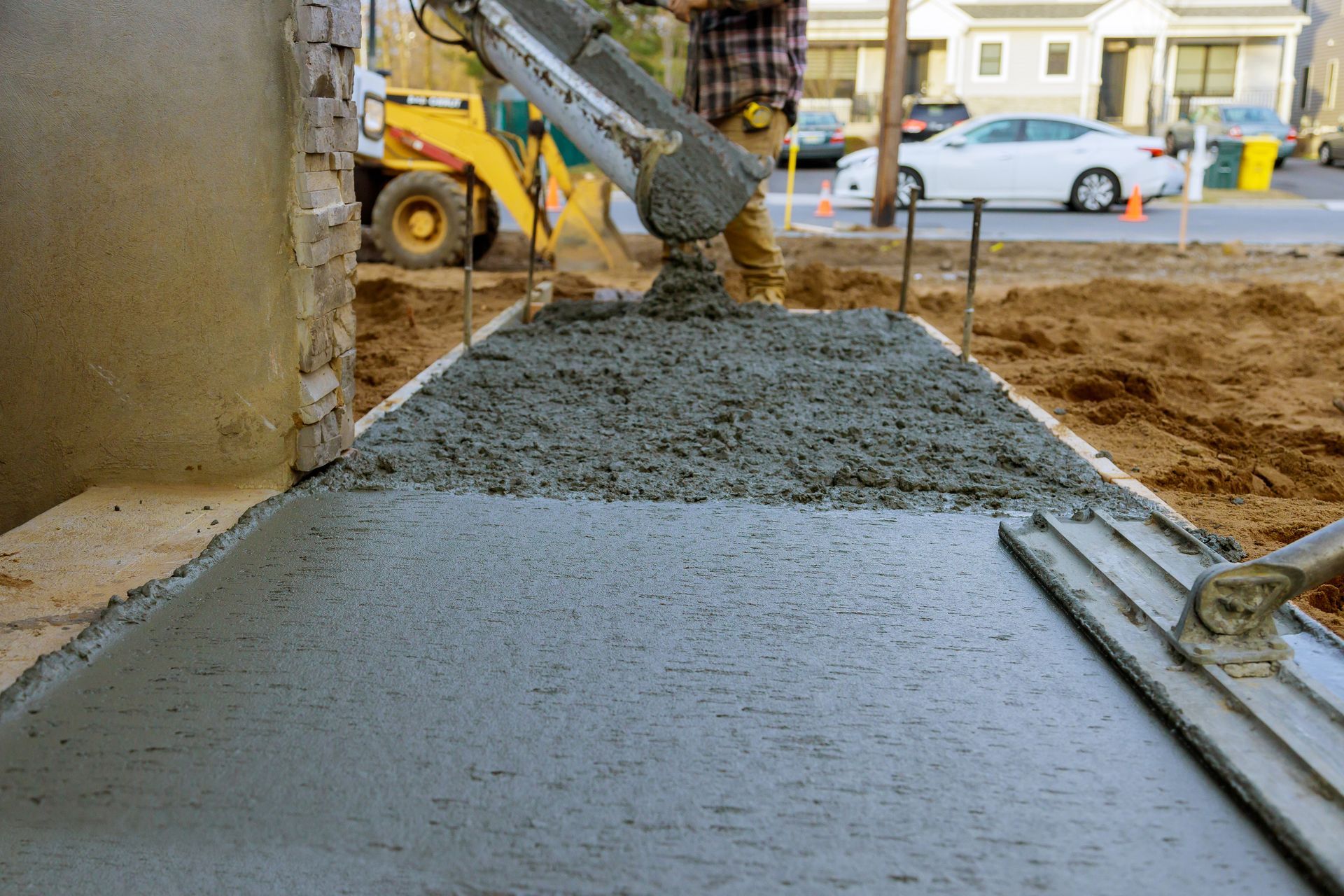
If rain falls while the concrete is still being placed or finished, excess water can interfere with the surface. Depending on the amount and timing of the rain, potential problems can include:
- A weaker concrete surface
- Surface scaling or dusting
- An uneven or damaged finish
- Discoloration
- Washed-out areas
- Changes to the surface texture
Heavy rain can be particularly problematic because it can physically disturb concrete that hasn't set.
Will Rain Ruin Freshly Poured Concrete?
Not necessarily.
A quick shower doesn't automatically mean the entire concrete project is ruined. How much damage occurs depends on how fresh the concrete is, how heavy the rain is, how long it lasts, and whether the surface was protected.
Concrete that has already set enough to resist surface damage will generally handle rainfall better than concrete that was just poured.
If you're unsure whether rain affected a recent pour, evaluate the surface after conditions improve rather than assuming the entire project needs to be replaced.
How Soon After Pouring Concrete Can It Rain?
There isn't one exact amount of time that applies to every concrete pour.
Concrete setting times vary depending on the mix, temperature, humidity, additives, slab thickness, and other jobsite conditions.
The biggest concern is rain hitting the concrete while it is still plastic and before finishing is complete. As the concrete sets and begins curing, the risk of rain physically damaging the surface decreases.
This is why contractors pay close attention to both the weather forecast and the specific conditions at the jobsite when scheduling concrete delivery.
Is Rain Good for Curing Concrete?
Moisture does play an important role in concrete curing, but there's a difference between controlled moisture and rain falling on freshly placed concrete.
Concrete cures through a chemical reaction between cement and water. Maintaining appropriate moisture during curing can help concrete develop strength.
However, heavy rain immediately after placement isn't a substitute for proper curing. Too much uncontrolled water at the wrong stage can negatively affect the surface.
Once the concrete has sufficiently set, rain is generally much less concerning.
What Should You Do If It Starts Raining During a Concrete Pour?
If rain starts while concrete is being placed or finished, protecting the surface becomes the priority.
Depending on the project and conditions, crews may use plastic sheeting or other coverings to shield fresh concrete from direct rainfall.
It's also important not to work rainwater into the concrete surface. Adding excess water during finishing can negatively affect the finished surface.
Preparation makes a big difference. If there's even a possibility of rain, having appropriate coverings ready before the concrete truck arrives can save valuable time if the weather suddenly changes.
Should You Cover Fresh Concrete Before It Rains?
If rain is expected before the concrete has adequately set, covering it can help protect the surface.
Plastic sheeting and other waterproof coverings may be used, but they need to be placed carefully. Allowing a covering to rest directly on very fresh concrete can leave marks or affect the finish.
The appropriate method will depend on the project, stage of the pour, and current conditions.
For contractors, checking the forecast and having a rain plan in place before concrete arrives is much easier than trying to find a solution once the storm has already started.
What If It Rains the Day After Pouring Concrete?
Rain the following day is generally less concerning than rain during or immediately after placement because the concrete has had additional time to set.
However, concrete doesn't fully cure overnight. The curing process continues for much longer, so the surface should still be protected from conditions that could damage it.
Avoid assuming that concrete is ready for normal use simply because it survived the first night.
When you can walk, drive, build, or place heavy loads on new concrete depends on the project and curing conditions.
How Can You Tell If Rain Damaged New Concrete?
Once the rain has stopped and the concrete has had time to set, inspect the surface.
Signs that rain may have affected the concrete include:
- Uneven or rough areas
- Washed-out sections
- Visible surface erosion
- Unusual discoloration
- A soft or powdery surface
- Changes in the intended finish
Minor cosmetic issues and more significant surface damage aren't the same thing. If you aren't sure how serious the damage is, have an experienced concrete professional evaluate the finished surface.
Plan Ahead for Your Next Concrete Pour
You can't control Middle Tennessee weather, but you can prepare for it.
Check the forecast leading up to your pour, prepare the jobsite before delivery, have coverings available when rain is possible, and make sure you're ordering the appropriate concrete mix for your project and conditions.
Planning your concrete delivery carefully can also help keep the project moving efficiently once the truck arrives.
Order Ready Mix Concrete From Orgain Ready Mix
Whether you're pouring a residential driveway, patio, foundation, commercial slab, sidewalk, or another concrete project, starting with the right ready mix matters.
Orgain Ready Mix supplies quality ready mix concrete for residential and commercial projects throughout Middle Tennessee. With locations serving Clarksville, Murfreesboro, Pleasant View, and surrounding communities, our team works with contractors, builders, businesses, and homeowners to help keep concrete projects moving.
Not sure how much concrete you need? Use our online Concrete Calculator to estimate the amount of ready mix needed for your upcoming pour.
Planning a concrete project? Contact Orgain Ready Mix to discuss your project and schedule your ready mix concrete delivery.